
Blog Details

When Words Are Hard To Find
Some children go quiet exactly when they most need to be heard. It is not stubbornness. Speaking about a feeling asks a child to do several difficult things at once: notice it, name it, judge whether it is safe to say, and then say it out loud to someone who is watching.
Lorem ipsum dolor sit amet, consectetur adipiscing elit, sed do eiusmod tempor incididunt ut labore et dolore magna aliqua. Ut enim ad minim veniam, quis nostrud exercitation ullamco laboris nisi ut aliquip ex ea commodo consequat. Duis aute irure dolor in reprehenderit in voluptate velit esse cillum

For a child who is overwhelmed, shy, still learning the language, or recovering from something frightening, that is a great deal to ask. A nonverbal way to communicate removes most of the difficulty while keeping the message intact.
Pointing Comes Before Explaining
Long before children can describe an emotion, they can recognize one. Showing a face and choosing it is a complete act of communication, and it asks nothing that the child cannot yet do.
The Side Pocket And The Front Pocket
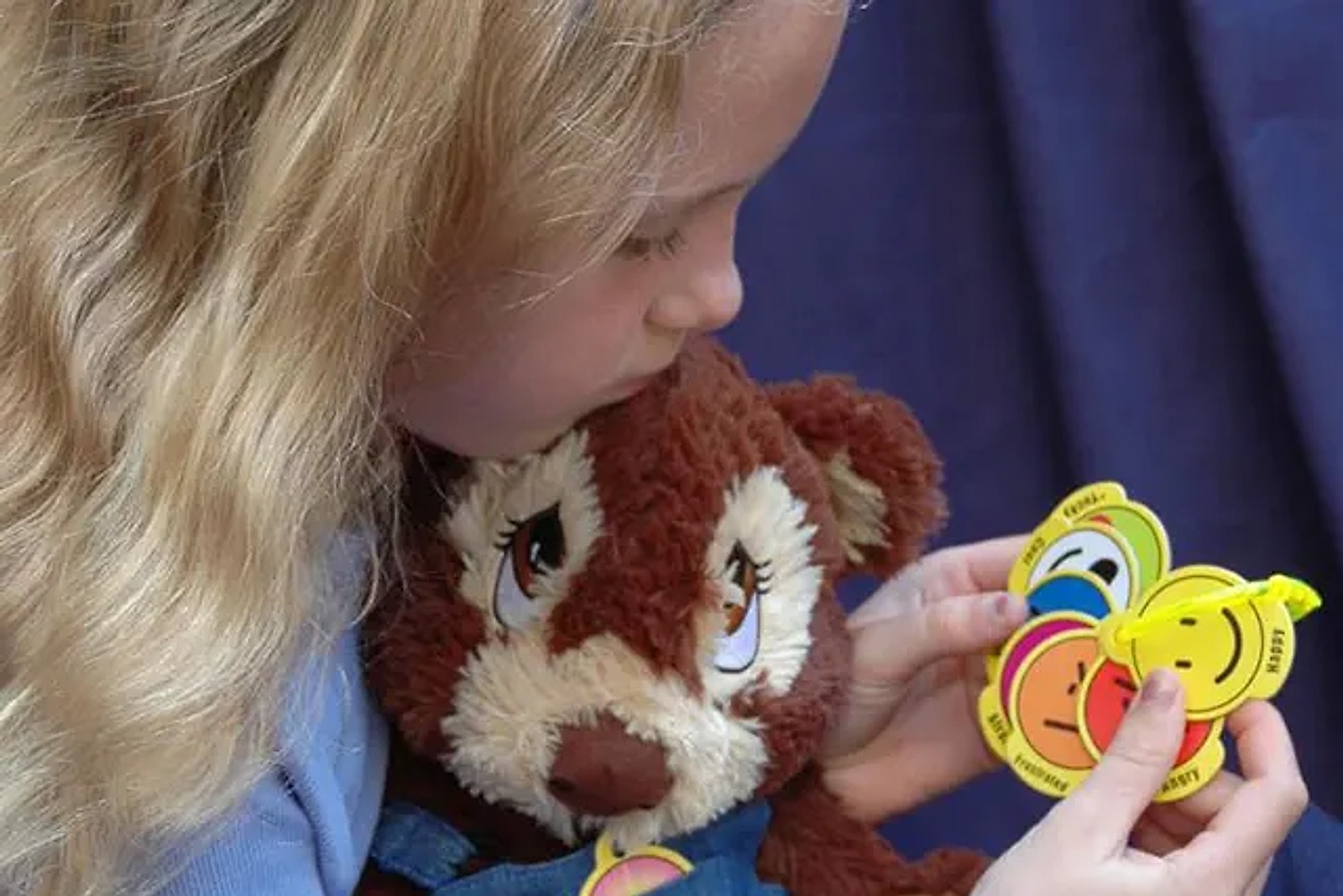
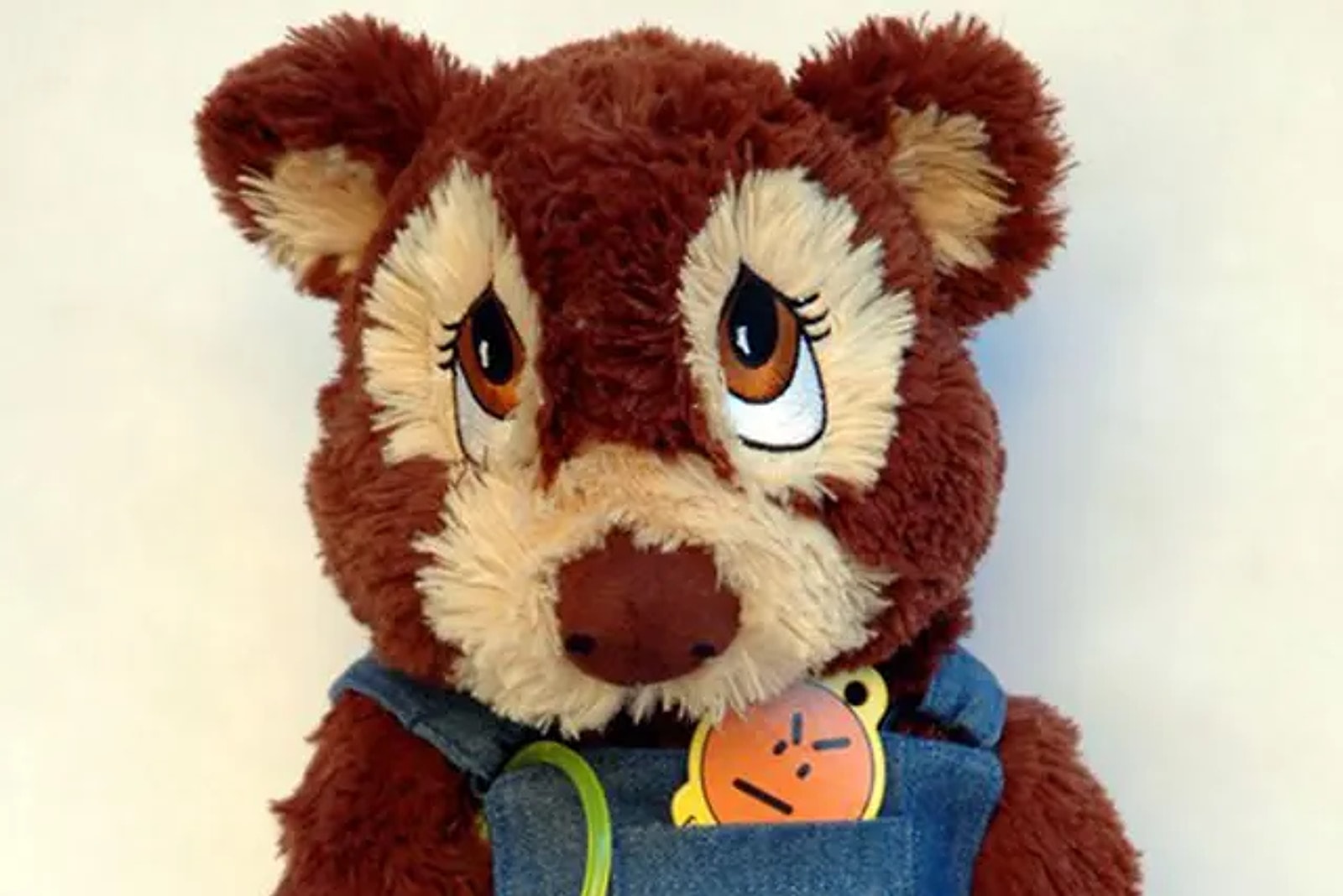
P.A.T.C.H.E.S. carries his Feeling Faces in a side pocket. A child chooses one and places it in the front pocket, where it can be seen. Nothing has to be spoken. The bear says it for them.
The choice can be changed at any time, which matters more than it sounds: a child who knows a feeling can be swapped is far more willing to show one in the first place.
Why It Helps In Hard Places
In hospitals, shelters, counselling rooms and new classrooms, children are often asked to explain themselves to adults they have only just met. A bear on the table changes the shape of that conversation. The adult is no longer questioning the child; the two of them are looking at something together.
Ten Faces, Not One Answer
Happy, Sad, Frustrated, Angry, Hurt, Yucky, Cool, Afraid, Fluttering and Hope. Children frequently choose two or three at once, and they are right to. Being able to show a mixture is often the first time a child realizes that mixed feelings are allowed.
From Showing To Saying
Nonverbal tools are not a replacement for language; they are the on-ramp to it. A child who points to Frustrated for a week often begins saying the word in the second week, because the word has been attached to something real and nobody made a fuss about it.
The goal is never to make a child talk. It is to make sure that a child who cannot talk is still heard.

Kathylee Forrester
AuthorKathylee Forrester is the creator of P.A.T.C.H.E.S. For more than two decades she has worked alongside children, families and caregivers, helping young people find words for what they feel and reminding them that hope belongs in every story.
Comments
Post a Comment
Kathylee Forrester
AuthorRecent Posts


September 2, 2026
Helping Children Through Big Changes

August 28, 2026
Why Every Feeling Deserves To Be Heard

June 25, 2026
Finding Hope In Difficult Moments
Tag Cloud

Greg Sandoval
Good piece. The point about a feeling being swappable is the bit I had missed.
Sofia Marchetti
My son is selectively mute at school. The idea that the bear says it for him is exactly what we have been trying to explain to his teachers.